

Understanding Wisdom Teeth: When They Erupt and Why They Cause Trouble

Are you or your teen wondering if those wisdom teeth really need to come out? It’s a common question, and an important one. Wisdom teeth, also called third molars, often emerge in the late teens or early twenties. For some people, they cause no trouble at all. For others, they can lead to pain, crowding, or even infections.
Deciding whether to remove wisdom teeth isn’t always straightforward. Dentists and oral surgeons weigh several factors, including how the teeth are growing, if they’re causing symptoms, and the potential risks of keeping them versus having them removed. Understanding the reasons behind each option can help you make the best decision for your health or your child’s.
Let’s break down what you need to know so you can make an informed choice about wisdom teeth removal.
Wisdom teeth eruption is the process by which your third molars emerge, usually after your jaw has already settled into its adult size. This late eruption can lead to a range of wisdom teeth symptoms, including third molar pain, infection, and crowding. While some people experience no issues during wisdom teeth eruption, others face discomfort or dental problems that require attention.
By the end of this article, you will understand when wisdom teeth typically erupt, why they create complications for so many people, how dentists evaluate whether removal is the right call, and what the procedure and recovery actually look like.
What Are Wisdom Teeth?
Wisdom teeth are your third molars, the last set of large grinding teeth at the very back of your mouth. You have four jaw quadrants (upper left, upper right, lower left, lower right), and a fully developed wisdom tooth can sit in each one. That said, not everyone grows four. Some people develop only one, two, or three, and a small percentage of the population experiences agenesis, meaning they never grow wisdom teeth at all.
From an evolutionary standpoint, wisdom teeth made sense. Early humans ate coarse, unprocessed diets that wore down teeth quickly, and a third set of molars gave the jaw extra chewing power to compensate. Over thousands of years, human diets changed and, with them, jaw sizes shrank. The wisdom teeth, however, did not get the memo. They still try to show up, even when there is no longer enough room for them.
When Do Wisdom Teeth Erupt?
The typical wisdom teeth removal age is between 17 and 25 years old, which coincides with the usual period of wisdom teeth eruption. This is why these third molars earned their nickname, arriving during the supposedly wiser years of early adulthood. However, the wisdom teeth eruption and removal age can vary widely.
Some people notice their wisdom teeth beginning to push through as early as 15. Others do not see any activity until their thirties, forties, or even fifties. Late eruption is less common, but it does happen, and wisdom teeth can surprise people well into middle age.
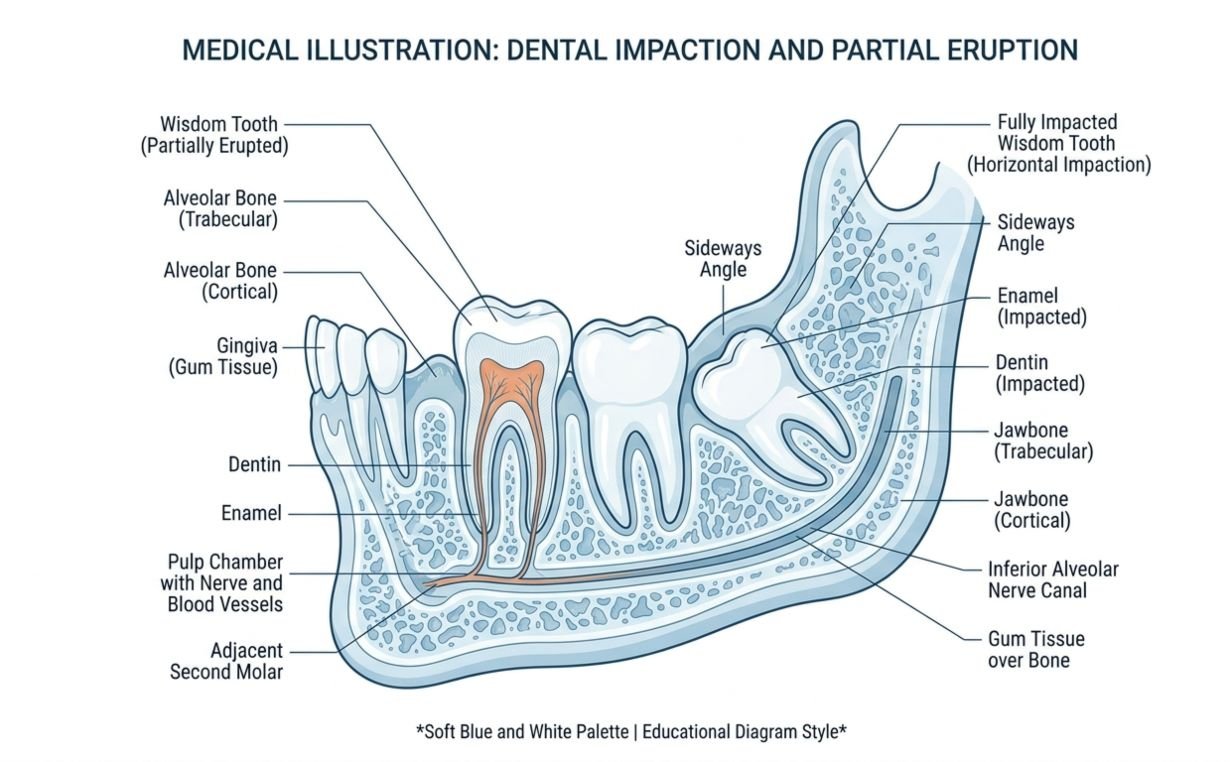
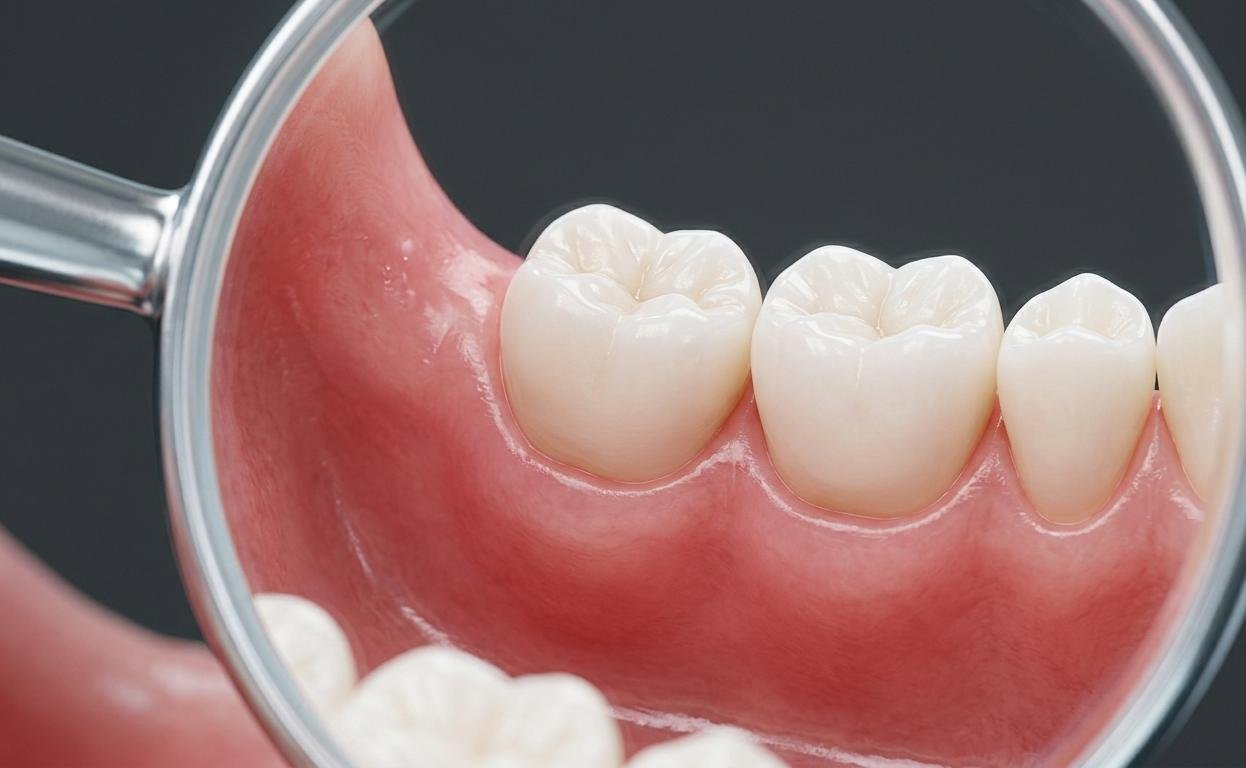
Eruption can also be partial. Instead of a tooth fully clearing the gum line and becoming visible, only part of the crown pokes through. This partial eruption is particularly problematic because it creates a small flap of gum tissue over the tooth, which is difficult to clean and becomes a reliable trap for bacteria.
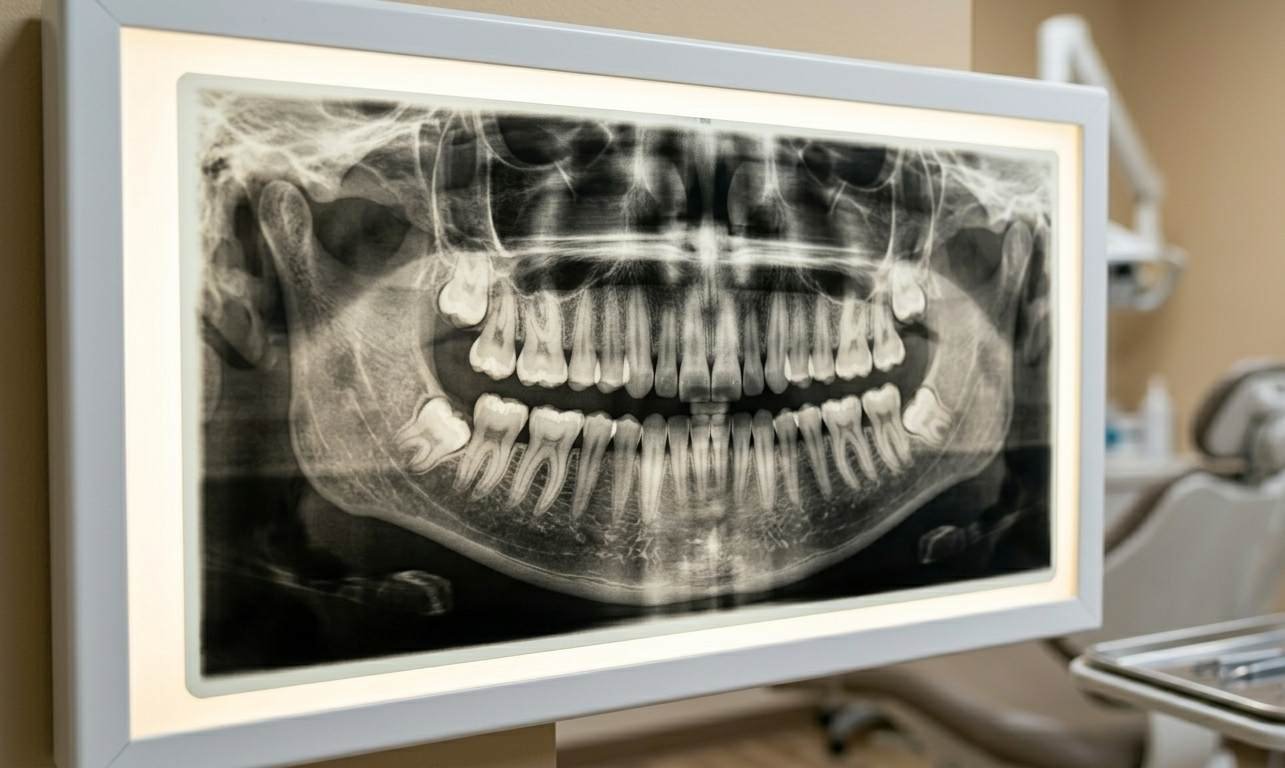
Because wisdom teeth develop deep in the jaw long before they are visible, dentists typically recommend panoramic X-rays around age 16 to 18 to track how they are forming and which direction they are heading. Catching problems on an X-ray before symptoms develop gives you more treatment options and generally a smoother recovery.
Why Wisdom Teeth Cause Problems
Not every wisdom tooth causes trouble, but many do. Here are the four main complications and why each one matters.
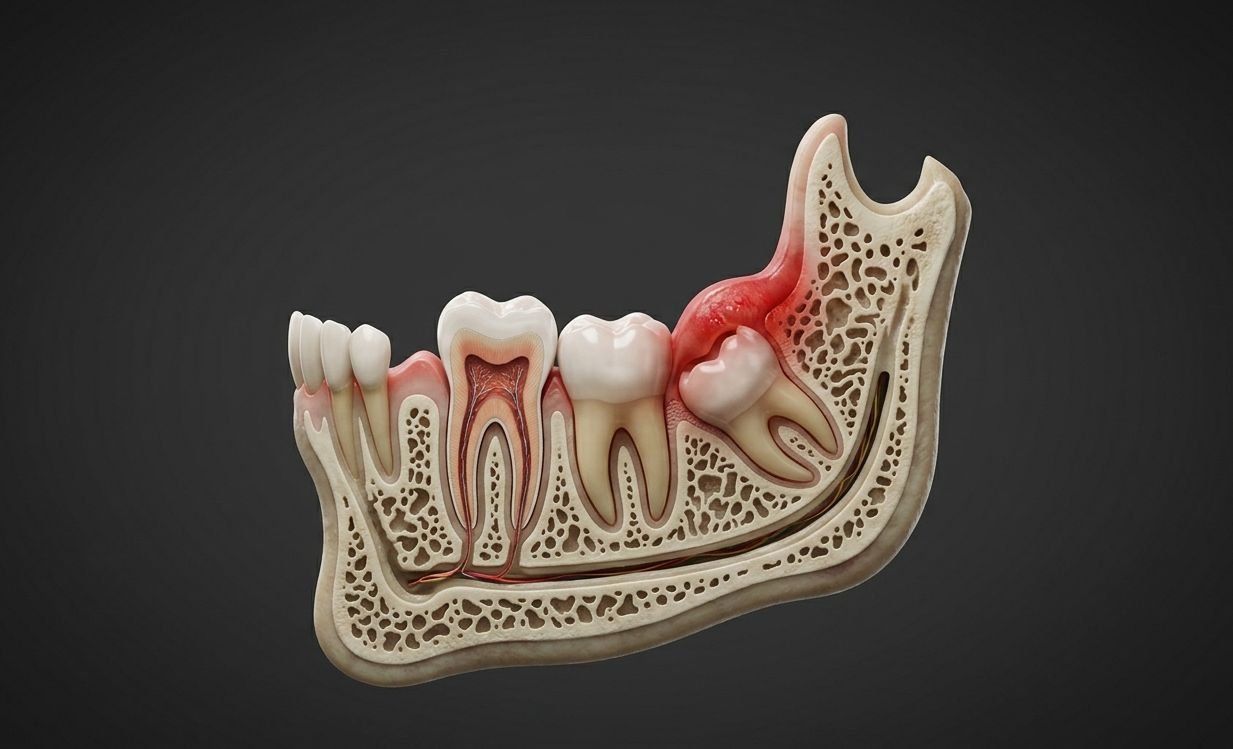
Impacted wisdom teeth occur when a third molar cannot fully erupt due to blockage by bone, adjacent teeth, or dense gum tissue. Impacted wisdom teeth might be angled sideways, tilted toward the back of the mouth, or trapped completely below the gum line. Partial impaction is especially common during wisdom teeth eruption and creates a gum pocket where bacteria accumulate, leading to potential infection and pain.
Crowding develops when an erupting wisdom tooth pushes against the second molar beside it. The pressure can shift the bite and undo years of orthodontic work. Dentists and orthodontists debate how much wisdom teeth actually contribute to crowding in the front teeth, and the evidence is mixed, but pressure on adjacent molars is real and measurable.
Pericoronitis is a gum infection that forms around a partially erupted wisdom tooth. The gum flap covering part of the tooth traps food and bacteria underneath, leading to swelling, pain, and sometimes pus. Pericoronitis tends to be recurring. It clears up with antibiotics and rinsing, then comes right back a few weeks later. In some cases, a dentist can use a soft tissue laser to remove the flap of gum tissue and relieve the problem, which you can read more about in the Doctiplus article on laser dentistry procedures and benefits.
Cysts and tumors are the most serious but least common complications. Every unerupted wisdom tooth sits inside a small sac of tissue. In rare cases, the sac fills with fluid and forms a cyst, which can damage the surrounding bone and neighbouring teeth. Left untreated, some cysts develop into tumors. This is one of the reasons dentists take monitoring seriously, even for asymptomatic impacted teeth.
Complications at a Glance
| Complication | What Happens | Risk Level |
| Impaction | A tooth blocked by bone or gum cannot erupt fully | Very common |
| Crowding | Pressure on adjacent molars shifts the bite | Moderate |
| Pericoronitis | Recurring gum infection around a partial eruption | Common |
| Cysts and tumors | A fluid-filled sac forms around an unerupted tooth | Rare but serious |
Wisdom Teeth Symptoms: Signs of Problematic Eruption
Sometimes, wisdom teeth make their trouble known loudly. Other times, the signs are subtle enough to be mistaken for something else. Watch for these symptoms:
- Third molar pain at the very back of the jaw, especially during chewing
- Swollen, red, or tender gums in the area around the back molars
- Bad breath or an unpleasant taste that does not go away with brushing
- Difficulty opening your mouth fully, a condition called trismus
- Pain that seems to radiate toward your ear or jaw joint
- Recurring sinus pressure or congestion (this typically signals problems with the upper wisdom teeth, which sit near the sinus cavity)
If you are experiencing more than one of these at the same time, it is worth calling your dentist rather than waiting to see if it resolves on its own. Pericoronitis in particular tends to escalate if left unaddressed.
How Dentists Decide on Removal
The decision to remove a wisdom tooth is not automatic. Dentists weigh several factors together before making a recommendation.
A tooth that is fully erupted, sitting upright, healthy, and easy for you to clean may not need to come out at all. On the other hand, impacted wisdom teeth, those angled oddly, causing recurring infections, or threatening an adjacent molar, are strong candidates for removal. Wisdom teeth removal age is important: younger patients, typically those in their late teens or early twenties, tend to have less developed roots and softer surrounding bone, which generally makes extraction easier and recovery faster.
Use this quick reference to understand how the decision typically plays out:
| Factor | Lean Toward Keeping | Lean Toward Removing |
| Symptoms | None | Pain, swelling, infection |
| X-ray findings | Upright, fully erupted, no crowding | Impacted, angled, near nerve |
| Patient age | Older adult, asymptomatic for years | Teens to mid-20s |
| Tooth position | Fully visible, cleanable | Partially erupted or buried |
| Future risk | Low, easy to monitor | High, or adjacent tooth at risk |
If a wisdom tooth has crowded or damaged the molar beside it, you may eventually need to consider options for that neighbouring tooth. The Doctiplus guide to dental bridges vs implants covers what those reconstructive choices look like.
The Removal Procedure and Recovery
Wisdom tooth removal is one of the most common oral surgery procedures performed worldwide, and for straightforward cases, it is far less dramatic than its reputation suggests.
For a fully erupted tooth, your dentist or oral surgeon can often perform a simple extraction under local anaesthesia in the office. For impacted teeth, particularly those buried in bone, intravenous sedation is usually recommended so you remain comfortable and still throughout the procedure. Most patients have all four teeth removed in a single appointment, and the surgery itself typically takes 30 to 60 minutes.
Recovery follows a predictable pattern for most people. The first 24 to 48 hours bring the most swelling and discomfort. Days three and four are usually the peak, and most patients feel significantly better by day five. Full tissue healing takes closer to seven to ten days, and complete bone healing takes several months, though you will not notice that phase at all.
Aftercare Tips

- Apply ice packs to your cheeks in 20-minute intervals for the first 24 hours to control swelling.
- Eat soft foods for the first several days: yogurt, mashed potatoes, soup, scrambled eggs.
- Do not use straws. The suction can dislodge the blood clot forming in the socket.
- Avoid smoking for at least 72 hours, ideally longer
- Begin gentle saltwater rinses after the first 24 hours to keep the area clean.
The complication to watch for most closely is dry socket, which occurs when the blood clot in the extraction site is dislodged or dissolves before healing is complete. It typically shows up between days three and five as a sharp, throbbing pain that the usual pain relievers do not touch well. If you suspect dry socket, call your dentist promptly because it needs a specific in-office treatment to resolve.
When Removal Is Not Needed
It is worth saying clearly: not every wisdom tooth needs to come out. Fully erupted third molars that are healthy, properly positioned, and reachable with your toothbrush and floss can stay right where they are. A dentist who recommends routine monitoring for asymptomatic, well-positioned wisdom teeth is giving you entirely appropriate advice.
Older adults with deeply impacted but asymptomatic wisdom teeth present a different calculation. In some cases, the roots of long-impacted teeth become intertwined with the inferior alveolar nerve in the lower jaw. Removing those teeth carries a meaningful risk of temporary or permanent numbness. When there are no symptoms and the X-rays show no active threat to surrounding teeth or bone, leaving a deeply impacted tooth in place and monitoring it annually is often the more sensible choice.
The takeaway is that wisdom tooth management is individual. What is right for your friend or sibling may not be right for you.
Expert Perspective
“When patients come to us in their late teens or early twenties, the roots of their wisdom teeth are typically only two-thirds formed, the bone around the teeth is less dense, and healing is significantly faster. Waiting until your thirties or forties does not make the problem go away. It just makes the surgery more involved and the recovery longer,” says Dr Marcus Hale, Oral and Maxillofacial Surgeon at Summit Oral Surgery Associates.
Frequently Asked Questions
Is wisdom tooth removal painful?
The procedure itself is not painful because local anaesthesia or sedation keeps you comfortable throughout. Discomfort after the anaesthesia wears off is normal and manageable with prescription or over-the-counter pain relief. Most patients describe it as a sore, achy jaw for three to five days, not the ordeal they had anticipated.
What happens if I never get my wisdom teeth out?
If your wisdom teeth are fully erupted, healthy, and clean, nothing bad needs to happen. The risk comes with impaction, partial eruption, or crowding. Untreated problematic wisdom teeth can lead to recurring infections, damage to neighbouring molars, cyst formation, and, in rare cases, more serious complications. Annual monitoring with X-rays helps catch problems early if you choose to wait.
Can wisdom teeth grow back after removal?
No. Once a tooth is extracted, it does not regrow. In very rare cases, a person can have a supernumerary (extra) wisdom tooth that was not visible on earlier X-rays, but this is genuinely uncommon and distinct from regrowth.
How much does wisdom teeth removal cost in 2026?
Costs vary widely depending on how many teeth are removed, the complexity of the extraction, the type of anesthesia used, and your location. A simple erupted tooth extraction typically ranges from 75 to 200 dollars per tooth. Impacted teeth requiring surgical extraction can run 225 to 600 dollars per tooth or more without insurance. Many dental insurance plans cover a portion of the procedure, particularly when medical necessity is documented.
How long do I need off work or school after surgery?
Most people take two to three days off and feel well enough to return to a desk job or school by day four or five. If your job involves physical labor or you had a particularly complex surgery, plan for five to seven days before resuming strenuous activity.
Disclaimer
This article is for informational purposes only and does not replace professional medical or dental advice, diagnosis, or treatment. Always consult a qualified healthcare provider with questions about your individual condition. Do not delay seeking medical attention because of something you read here.
References
- American Association of Oral and Maxillofacial Surgeons. Wisdom Teeth Management.aaoms.org
- Mayo Clinic. Wisdom Teeth Removal: Overview and Recovery.mayoclinic.org
- National Institute of Dental and Craniofacial Research. Oral Health in America.nidcr.nih.gov